The short answer
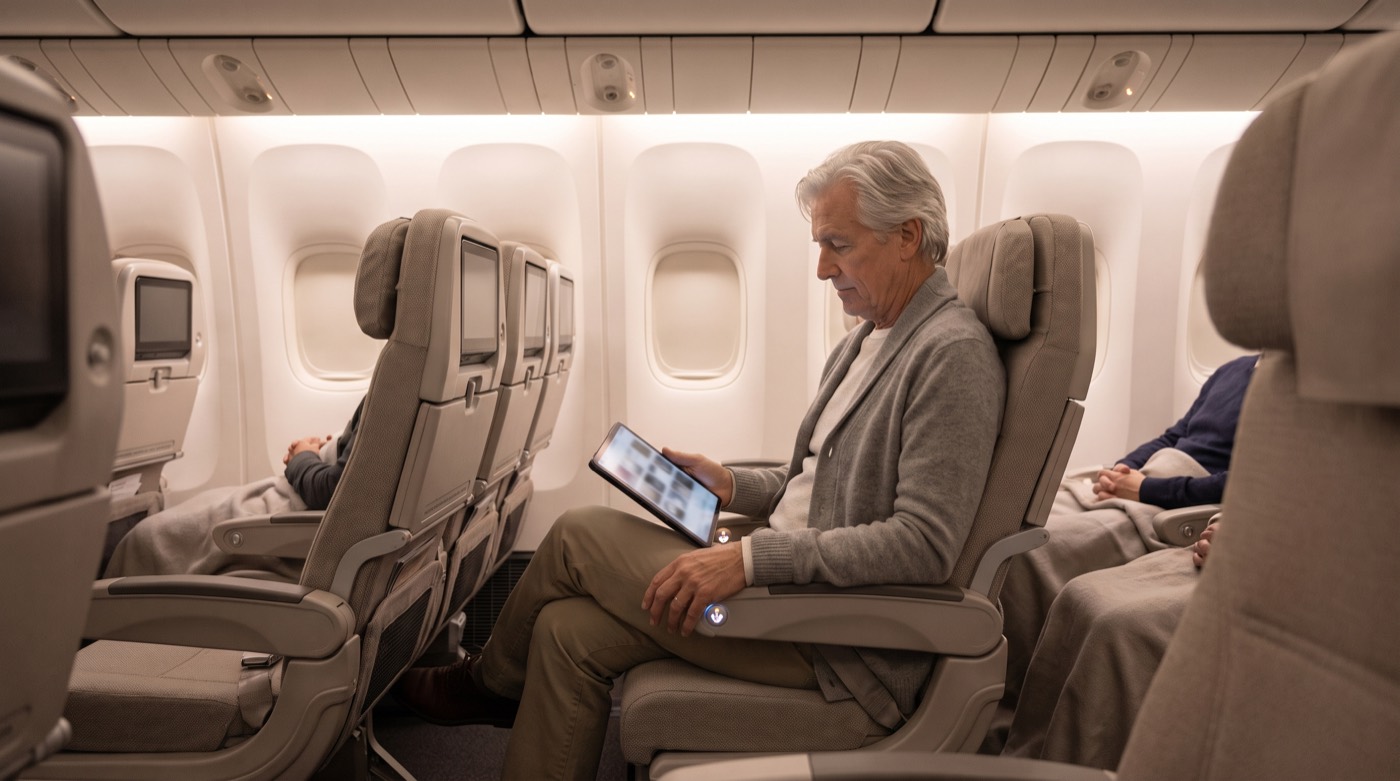
For many older travelers, the best airplane seat is an aisle seat close enough to the restroom and away from high-traffic or galley noise. The right choice depends on mobility, sleep preference, flight length, budget and whether the passenger meets any exit-row requirements.
Best airplane seats for travelers over 60: choose the flight experience you need
The “best” airplane seat depends on what makes the flight manageable: easy restroom access, less climbing over others, a view, sleep, legroom or a calm location away from a galley. A seat map alone cannot answer that. What helps is knowing the tradeoff each seat type carries — and remembering that fees, cabin layout and availability change from flight to flight.
Many travelers do best in an aisle seat with a straightforward path to a restroom, but that is not universal. Someone who sleeps well against a window may prefer fewer interruptions to easier access. Exit rows offer real space, but they come with legal duties and are a poor choice for anyone who cannot perform them.
- Decide what makes the flight hardest for you: standing up, sleeping, legroom or noise.
- An aisle seat costs you a little shoulder traffic and buys you freedom to move.
- Exit rows have legal duties attached — they are not simply extra space.
- The seat map for your exact aircraft matters more than the seat map for that route.
Matching the seat to what you need
There is no universally best seat, only the seat that solves your particular difficulty. Work down this table and pick the row that describes the hardest part of a flight for you.
| Seat area | Potential benefit | Watch out for |
|---|---|---|
| Aisle | Easier access and less climbing over others | Carts, traffic and interruptions |
| Window | Wall support, view and fewer seatmates crossing | Harder restroom access |
| Front cabin | Earlier exit and sometimes quieter service | Higher fee or limited recline near a bulkhead |
| Exit row | More legroom | Eligibility, fixed armrests and no personal item at feet |
| Bulkhead | No seat directly in front | Bassinet/galley traffic and limited under-seat storage |
Start from the hardest moment of the flight
Start with the hardest moment of the flight. If standing up repeatedly is difficult, prioritize an accessible path and a seat that does not require climbing over another passenger. If sleeping is the priority, consider window support and noise location. If the flight is long, a small amount of extra space may matter more than being closest to the front.
Never assume that a seat labelled “extra legroom” is automatically the most comfortable one. Check the aircraft's current seat map, any restrictions on that row, where the restrooms are, and the airline's own accessibility process before you pay.
- Check restroom distance, galley and lavatory queues.
- Confirm whether the seat reclines and whether the armrest moves.
- Do not select an exit row if assistance duties are not possible.
- Ask the airline about accessibility needs before relying on a seat purchase.
How the seat feels at each stage of the flight
A seat choice is really a series of small moments: boarding, take-off, the long middle, the restroom trip, and getting out at the end. Different seats win at different moments, which is why one recommendation cannot fit everyone.
Read the table below with your own flight in mind. A two-hour hop and a nine-hour overnight reward completely different choices.
| Stage of the flight | What matters most | Which seat tends to win |
|---|---|---|
| Boarding | Getting settled without blocking the aisle | Window, if you board early; aisle, if you board late |
| Take-off and landing | A stable, upright, uncrowded position | Anything forward of the wing |
| The long middle | Legroom and being able to stand up | Aisle, bulkhead or exit row |
| Restroom trips | Not climbing over other passengers | Aisle, a few rows from a lavatory |
| Sleeping | Something to lean on, fewer interruptions | Window, away from the galley |
| Getting off | Leaving without a long wait | Forward cabin, aisle |
Booking the seat, step by step
Once you know which stage matters most to you, booking the right seat takes about five minutes.
- Name the priority: access, sleep, space, view or quiet.
- Open the exact aircraft seat map.
- Check restroom, galley, bulkhead and exit-row restrictions.
- Compare the seat fee with the actual benefit for this flight.
- Request disability-related seating help through the airline when relevant.
- Recheck the seat after aircraft or schedule changes.
When a paid seat is worth it — and when it isn't
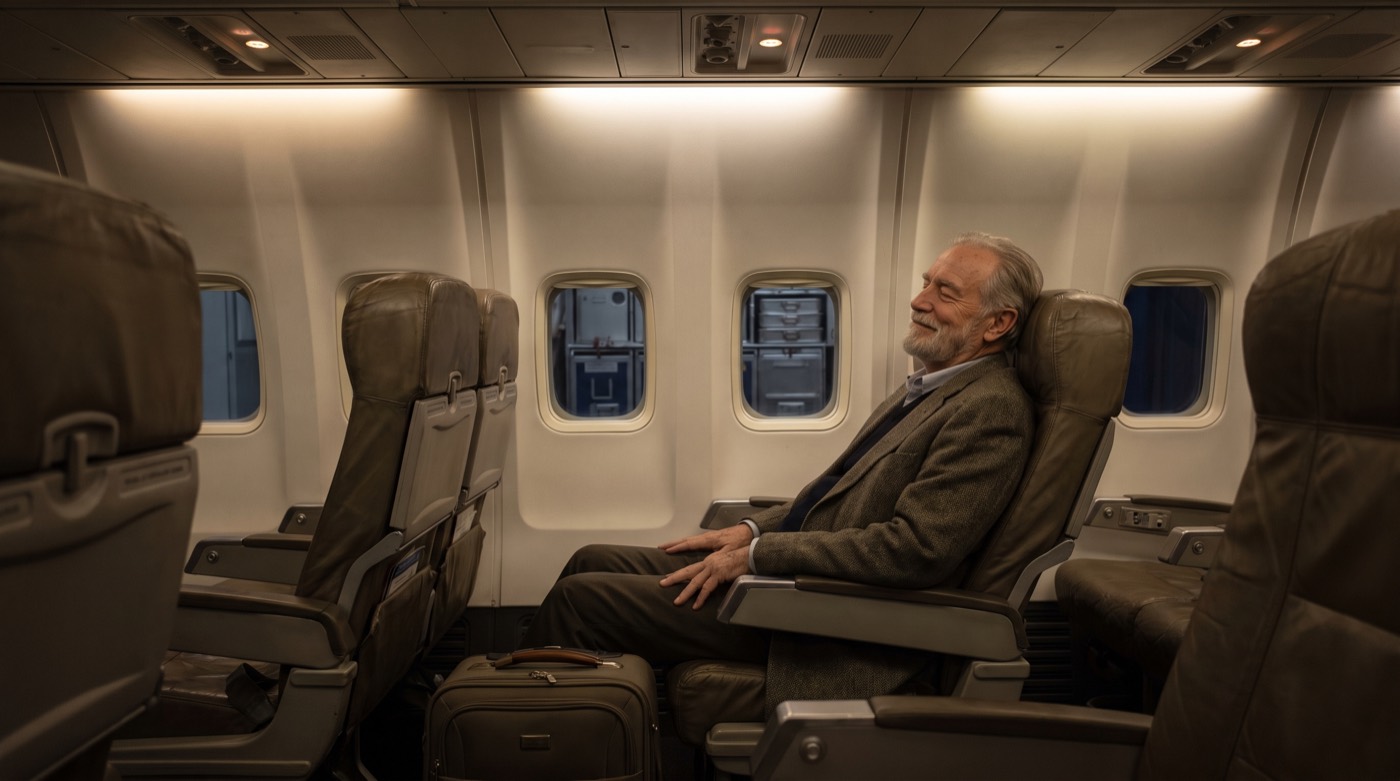
Paying for a seat is sometimes excellent value and sometimes a fee for nothing. It is usually worth it on a long flight, when travelling with someone you need to sit beside, or when the alternative is a middle seat you physically struggle with.
It is usually not worth it on a short flight with plenty of empty seats, or when the “extra legroom” row turns out to have fixed armrests, a bassinet position or no under-seat storage. Check what the seat actually gives you before paying for the label.
- Ask the airline about accessibility seating rather than buying blind — it may be free.
- Check whether the armrest lifts if transferring from a wheelchair.
- Re-check your seat after any aircraft change; assignments move.
- Avoid the last row and the row in front of an exit — both often have limited recline.
Watch this on our channel
The same subject, explained on screen — from our Over 60 Travel Secrets channel.
10 Airplane Hacks To SURVIVE a Long Haul Flight In Economy 60+
More videos on the Over 60 Travel Secrets channel →
Questions people ask
Which airplane seat is usually easiest for an older traveler?
An aisle seat often helps with access, but the right choice depends on sleep, noise, restroom needs, mobility and flight length.
Are exit-row seats always more comfortable?
No. They have eligibility requirements, may have fixed armrests and may not suit someone unable to perform required duties.
Should I pay for a seat near the front?
Compare the actual benefit—exit speed, noise, restroom distance or space—with the fee and the aircraft layout.
What if I need disability-related seating help?
Contact the airline early and describe the functional need; do not rely only on purchasing a preferred seat.
Sources & how we keep this current
Rules, fees and programs change. These are the official pages we check — go to them for the version that applies on your travel date.
Last reviewed: September 7, 2026. We re-check every guide quarterly and immediately after an official rule change.