The short answer
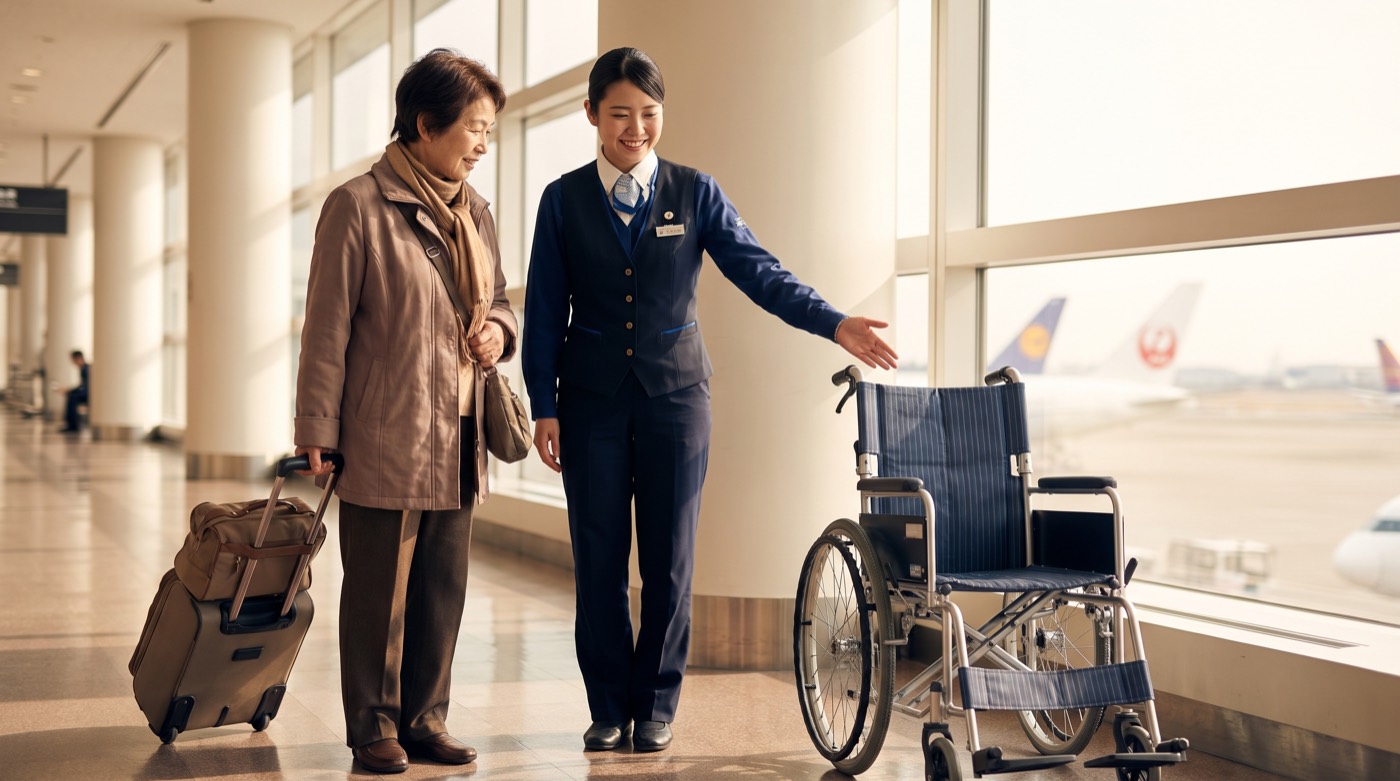
Request mobility assistance through the airline as early as possible, repeat the request at check-in and confirm where the assistance begins and ends. Under US disability air travel rules, airlines must provide certain assistance through the airport, but the exact service and equipment needs should be communicated clearly.
Airport wheelchair and mobility assistance: make the handoffs explicit
Requesting airport assistance is not admitting failure; it is planning the energy and distance of a travel day. The service works best when the airline knows exactly what you can and cannot do: walk to the gate, climb aircraft stairs, transfer to a seat, use the restroom independently or manage a personal mobility device. A vague request is the most common reason help arrives late or in the wrong form.
Ask where the service begins and ends: curb, check-in, security, gate, aircraft door, connection or baggage claim. A travelling companion can help, but it is worth saying your own preferences and limits out loud. Airlines have clear obligations under US rules; the practical details — wait times, equipment, the local process — still need confirming at your airport.
- Assistance is a service you are entitled to, not a favour you are asking for.
- Request it when you book, and confirm it again 48 hours before departure.
- Say what you need in plain terms — distance, steps, standing — not a diagnosis.
- A connection is the point where assistance most often breaks down, so name it explicitly.
What to ask for, and how to describe it
Assistance works best when you describe the difficulty rather than the label. Staff can act immediately on “I can walk about fifty yards, then I need to sit”; they cannot act on “I have trouble getting around”. Use this table to put your request into words that produce the right help.
| Need | Tell the airline | Confirm |
|---|---|---|
| Walking distance | Can you walk to the gate? | Where the chair/cart begins |
| Stairs/transfer | Can stairs and aircraft-seat transfer happen? | Aircraft boarding method |
| Personal device | Dimensions and battery details | Gate-check, storage and return |
| Connection | Need for continuous handoff | Who meets you at the next airport |
What to keep together, and what to repeat out loud
Keep your assistance request, confirmation number, medication and contact details together in one place you can reach easily. At check-in, repeat the request and ask the staff member to explain the next handoff. At a connection, do not leave the chair or cart until the next team knows where you are going.
Mobility assistance is airport support, not medical care. If you need oxygen, help with medication, a particular transfer technique or any clinical supervision, speak to the airline's medical desk well in advance and arrange that separately.
- Use specific functional descriptions instead of only a diagnosis.
- Give personal wheelchair dimensions and battery information early.
- Build a buffer for check-in, security, boarding and connections.
- Keep your own medication and essential documents where you can reach them.
What happens at each handoff
Airport assistance is not one person accompanying you the whole way. It is a chain of handoffs between teams, and the chain is where things go wrong — usually because nobody told the next team you were coming.
Knowing the sequence lets you check it. At each stage, ask one question: who takes over from here, and when? A five-second question prevents most long waits.
| Stage | Who usually helps | What to confirm before moving on |
|---|---|---|
| Arrival at the airport | Curbside or check-in staff | That your request is on the booking, not just promised |
| Check-in to security | Assistance team | Who meets you on the other side of screening |
| Security screening | TSA officers | That you can ask for a private screening if you prefer |
| Security to gate | Assistance team | The gate number, and that the gate has been told |
| Boarding | Gate staff and cabin crew | Whether you board early, and where your device goes |
| Arrival and connection | Arrival assistance team | Who is meeting you, and where you should wait |
How to put the request in place
Put the request in place early and confirm it twice. This is the sequence that gets it recorded properly rather than noted informally.
- Request assistance during booking or as soon as the need is known.
- Describe walking, stairs, transfer and device requirements.
- Confirm the request at check-in and ask for the next handoff.
- At connections, stay with the assistance team until the next handoff is clear.
- On arrival, verify baggage and onward transport before ending the request.
- Record what worked for the next trip.
If the help does not turn up
Most of the time assistance works. When it does not, the difference between a delay and a missed flight is how quickly you escalate — and escalating is not rude, it is the process the system expects.
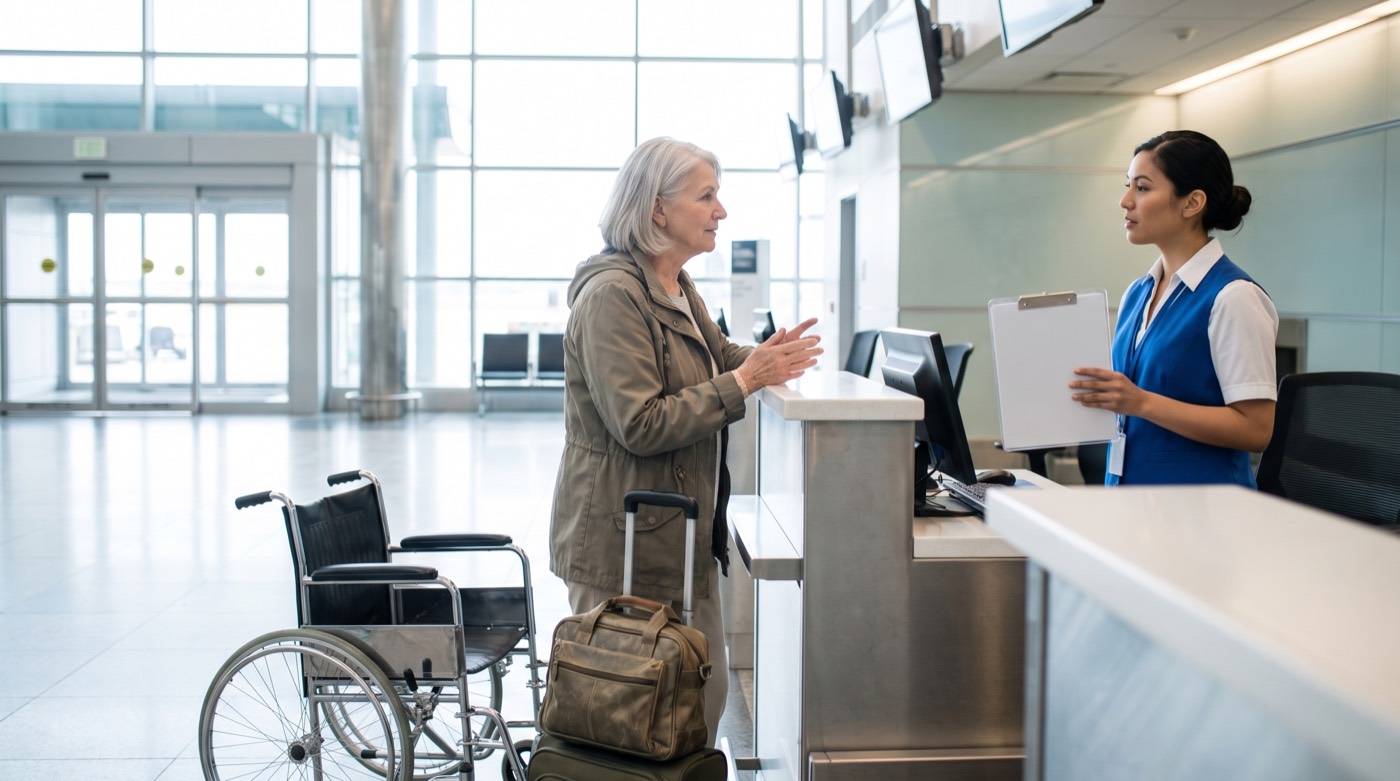
Stay where you agreed to be met, tell the nearest staff member that you are waiting, and ask for the airline's Complaints Resolution Official by name. Every US carrier must make one available while you are at the airport.
- Note the time, the place and the names of everyone you speak to.
- Ask to be rebooked before you leave the desk if a flight is missed.
- Photograph your mobility device before it is taken from you.
- File a written complaint afterwards — it is what changes how airports staff these teams.
Watch this on our channel
The same subject, explained on screen — from our Over 60 Travel Secrets channel.
15 Free Flight Perks for Seniors Airlines Don't Tell You About
More videos on the Over 60 Travel Secrets channel →
Questions people ask
When should I request airport wheelchair assistance?
As early as possible during booking or once the need is known, then confirm the request at check-in.
What information should I give the airline?
Explain walking, stairs, transfer and personal mobility-device needs, including dimensions and battery details when relevant.
Does assistance cover the whole airport journey?
Ask where it starts and ends and how the connection handoff works; the exact process can vary by airport and airline.
Is wheelchair assistance medical care?
No. Clinical support, medication administration or special transfer needs must be arranged and confirmed separately.
Sources & how we keep this current
Rules, fees and programs change. These are the official pages we check — go to them for the version that applies on your travel date.
- US DOT — Passengers With Disabilities
- US DOT — Airline Passengers With Disabilities Bill of Rights
- US DOT — Assistance in Air Travel
- TSA — Special Procedures & Screening Assistance
Last reviewed: September 7, 2026. We re-check every guide quarterly and immediately after an official rule change.