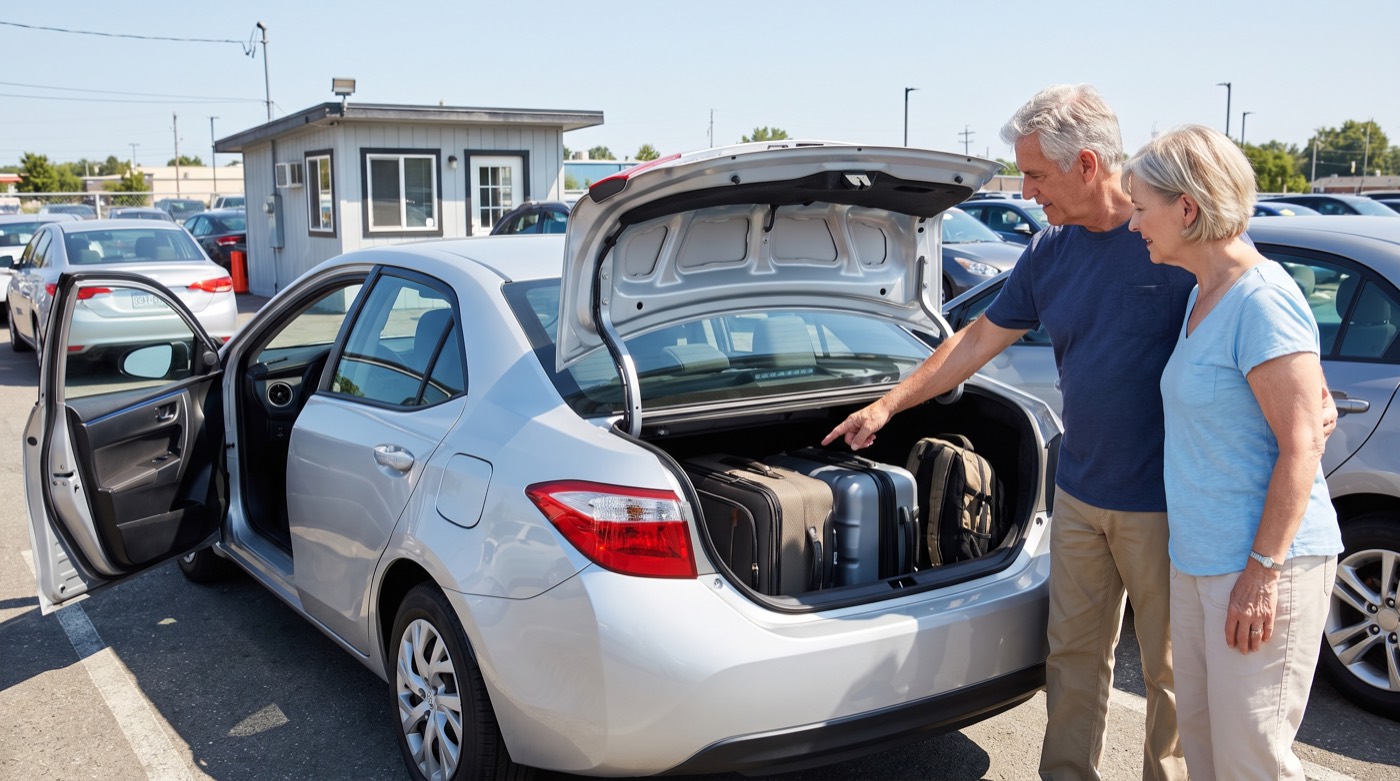
The short answer
Choose a rental car by visibility, entry height, controls, luggage space and route—not only by the daily rate. Before pickup, confirm driver-age rules, insurance, deposits, fuel policy, additional drivers, roadside assistance and the exact pickup process.
Rental car guide for travelers over 60: fit the vehicle to the route
The lowest daily rate is rarely the whole rental decision. A traveler may need an easy entry, clear controls, a comfortable driving position, luggage space and a pickup process that does not involve a long shuttle or confusing fuel rule. The right car is the one that fits you, your luggage and your route with the fewest surprises.
Compare vehicle height, visibility, transmission, driver requirements, additional drivers, insurance, the deposit, the fuel policy, roadside assistance, mileage limits and return hours. A comparison site shows you a price; the rental company's own terms decide what you actually pay.
- Entry height and visibility matter more than the size category on the booking page.
- The daily rate is rarely the real price — insurance, deposit and fuel decide that.
- Check whether a credit card or your own policy already covers rental insurance.
- Photograph the car before you drive away; it is the cheapest insurance there is.
What to compare beyond the daily rate
Rental comparison sites sort by price, which is the least useful sort for most drivers over 60. These are the things that actually determine whether the car suits the trip.
| Decision | Question | Verify |
|---|---|---|
| Entry/controls | Can the driver enter, exit and use the controls comfortably? | Exact vehicle class, not only a model photo |
| Luggage | Does the boot fit the real bags? | Capacity with passengers and mobility aids |
| Insurance | What is included and what is excluded? | Excess, deposit and roadside terms |
| Pickup/return | How far, how late and how documented? | Shuttle, inspection and fuel policy |
Inspect before the rental becomes expensive
At pickup, photograph the vehicle and dashboard, confirm the fuel level and check the contract before driving away. Ask how roadside assistance works and what to do after a breakdown. If you are travelling with a mobility device or a second driver, confirm storage and authorization in advance.
Match the route to your own comfort as a driver, not only the vehicle category. Narrow streets, mountain roads, driving on the other side, long distances and unfamiliar parking rules matter far more than one extra litre of luggage space.
- Confirm age, license, deposit and payment rules for every driver.
- Check automatic transmission and vehicle class explicitly.
- Price insurance and excess, not just daily rate.
- Document condition and fuel at pickup and return.
The rental, from booking to return
Most unpleasant surprises in car rental happen at two moments: the counter and the return. Both are entirely avoidable if you know in advance what will be asked of you.
Work through the table before you book, and keep it in mind at pickup. Ten minutes of care at the counter routinely saves several hundred dollars later.
| Stage | What to do | What it prevents |
|---|---|---|
| Booking | Choose transmission, class and entry height deliberately | Arriving to a car you find hard to get into or drive |
| Before you travel | Check your own insurance and card cover | Buying duplicate cover at the counter under pressure |
| At the counter | Read what you are signing; decline extras you don't need | Add-ons charged for the whole rental period |
| Before driving off | Photograph every panel, the fuel gauge and the mileage | Being charged for damage that was already there |
| During the rental | Keep fuel receipts; note the roadside number | Refuelling charges and being stranded without a contact |
| At return | Photograph the car again and get a signed receipt | Charges appearing weeks later on your card |
From booking to keys, step by step
This is the order that keeps the price you were quoted close to the price you actually pay.
- Describe the route, driving side, luggage and driver needs.
- Compare class, transmission, entry height and controls.
- Read insurance, deposit, fuel, mileage and additional-driver terms.
- Check pickup shuttle, opening times and roadside process.
- Photograph the car and confirm the contract before leaving.
- Return with fuel and timing documented; keep the receipt.
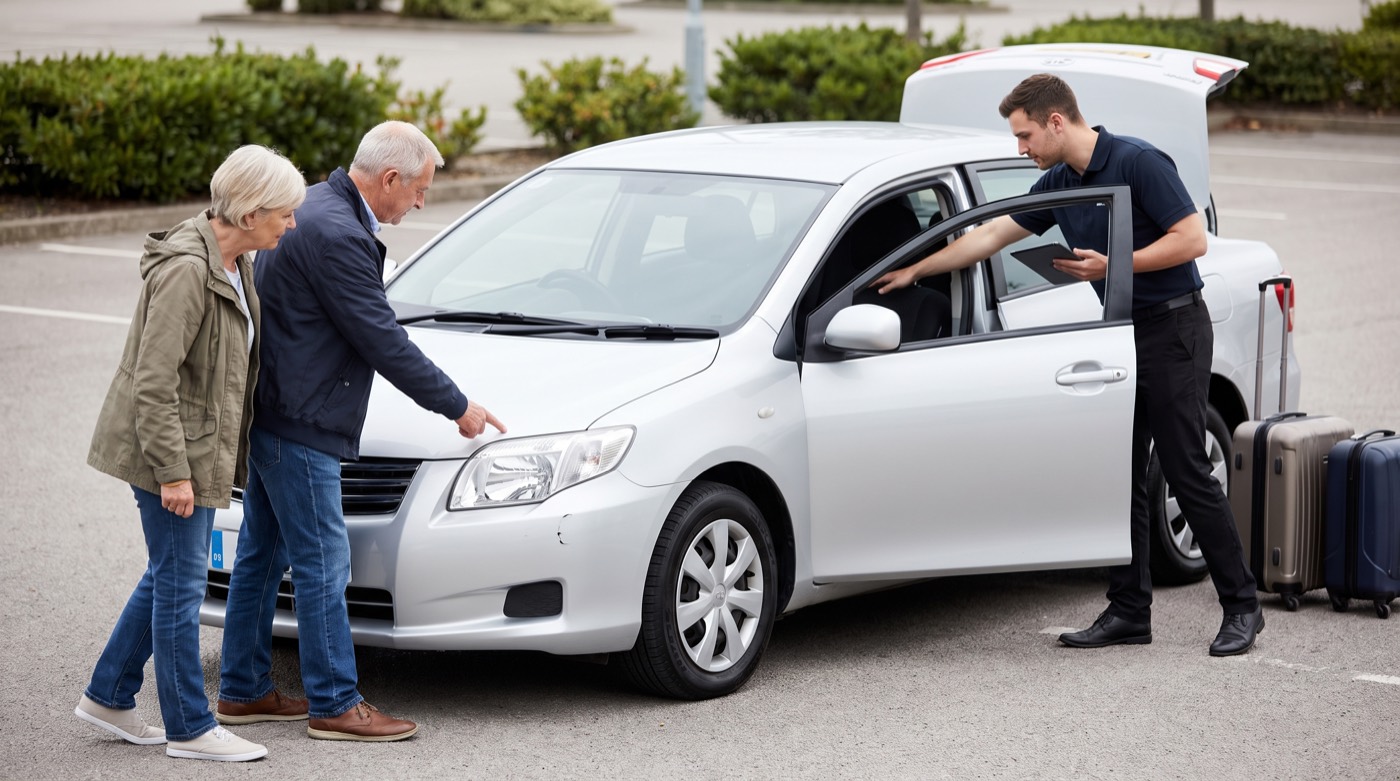
Driving somewhere unfamiliar
The vehicle is only half the decision. The other half is the route: narrow streets, mountain roads, driving on the other side, unfamiliar signage and parking that assumes you already know the city.
Be honest about which of those you want to take on. Choosing a car for the airport-to-hotel run and public transport for the city centre is not a compromise — for many trips it is simply the better plan.
- Book an automatic explicitly if you have not driven a manual recently.
- Check whether you need an International Driving Permit for the country.
- Avoid collecting a car straight after a long flight if you can.
- Plan the first drive in daylight, and keep it short.
Watch this on our channel
The same subject, explained on screen — from our Over 60 Travel Secrets channel.
New Travel Rules for 2026: Will Your ID Work?
More videos on the Over 60 Travel Secrets channel →
Questions people ask
What should older travelers check before renting a car?
Vehicle entry, visibility, controls, transmission, luggage, driver rules, insurance, deposit, fuel and pickup process.
Is the lowest daily rate the best deal?
Not necessarily. Add insurance, excess, deposit, fuel, additional-driver fees and transport to the rental location.
What should I do at pickup?
Inspect and photograph the car, confirm fuel and damage, read the contract and ask about roadside assistance.
Should I book a specific car model?
Usually compare the vehicle class and required features; model availability can change at pickup.
Sources & how we keep this current
Rules, fees and programs change. These are the official pages we check — go to them for the version that applies on your travel date.
- FTC Consumer Advice
- US State Department — International Travel
- US DOT — Aviation Consumer Protection
Last reviewed: September 7, 2026. We re-check every guide quarterly and immediately after an official rule change.